Web App Development and AI Search Optimisation
mpldigital.co.uk
The problem.
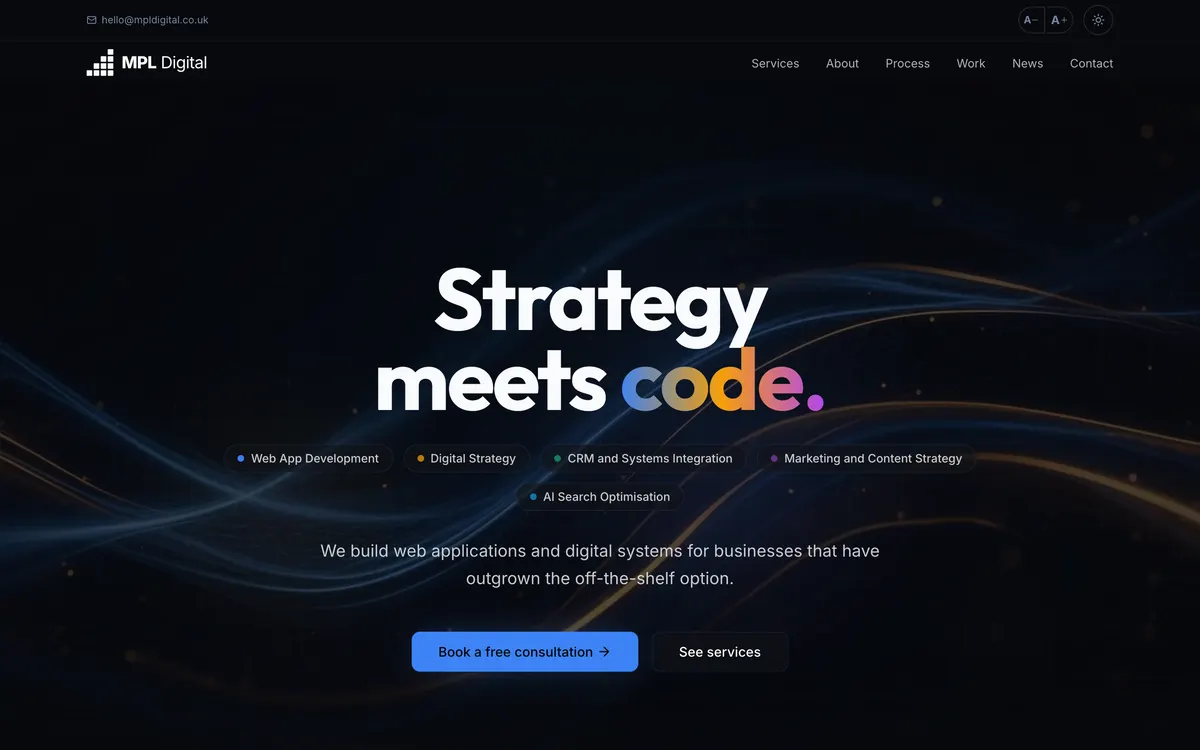
Our own site was built on a no-code platform and served 68 visible characters of HTML on every page. Everything a person saw was assembled afterwards in the browser. To a visitor it looked finished. To a search crawler, and to any AI assistant asked to recommend someone in our field, it was a blank page. We were selling AI search optimisation from a site that could not be read.
What we built.
We rebuilt it on Next.js and Firebase, server-rendered, and then audited it five times over with an independent reviewer until the findings stopped being serious. The audits are the interesting part. They found an import that had silently dropped a bulleted list from every article, an editor that would have deleted those lists the first time anyone pressed Save, database rules that exposed unpublished drafts to anyone holding the public key, and content that was server-rendered and then hidden with CSS, which is the entire point of the exercise undone in one line. Every one of those was invisible to a code review and obvious the moment somebody fetched the deployed page and read it. That is the standard we now hold client work to.
Results.
- Visible HTML per page, before and after
- 68 to 12,000+
- Accessibility, best practices and SEO, every route
- 100
- Largest Contentful Paint on mobile
- 1.7s
- Independent audit passes before launch
- 5